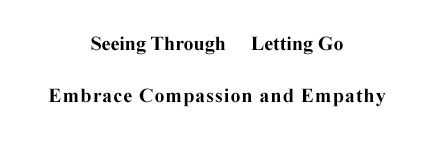


This post discusses Buddha’s doctrine of the Five Aggregates. The significance of the Five Aggregates Doctrine cannot be overstated. In the Five Aggregates Doctrine, the Buddha explains why the universe humans experience is observer-dependent and, therefore, illusory.
In Buddhism, a correct understanding of the Five Aggregates is immensely significant because it allows one to be liberated from one’s existential suffering and thereby fulfill the Buddha’s soteriological goal. The Five Aggregates Doctrine is also helpful to science because it helps explain the Observer Effect, also known as the central mystery of Quantum Mechanics. The Five Aggregates Doctrine also addresses a centuries-old unresolved question: “Why Is There Something Rather Than Nothing?”
While the Five Aggregates are critically important, they are also poorly understood. Indeed, without the guidance of the latter-day epistemology, it is practically impossible to understand them as steps in the sensing process.
However, with the help of contemporary epistemology, one comes to realize that, indeed, the Five Aggregates match precisely with the following five sensing steps that Dr. Fisch described in Post 23 on “How Do We Know What We Know?”, with one significant difference: Buddha’s Five Aggregates are all conscious. (If you are visiting this post before you have a chance to look at Post 23, it is highly recommended that you take a look at it before going on further in this post. Not only are the five steps of sensing important, but it is even more critical for you to understand the limits of human word-based knowledge. You will be surprised to know that while word-based knowledge allows humans to understand how things relate to each other, it cannot let them comprehend things as they are.)
The five steps of human sensing according to contemporary epistemology are:
- “the world impacts on us in a causal manner through all our senses,”
- “the content imparted on those stimuli is the reading-in of the mind,”
- “the content gets fashioned and conceptualized by our minds in ways that we do not govern,”
- “Sitting in the command room of our minds with the inner eyes and looking out,”
- “seeing on the screen the world that we experience.”
Aggregates are known in Romanized Sanskrit as skandha.
Skandha (Chinese: 蘊), according to The Princeton Dictionary of Buddhism, is “in Sanskrit, lit. ‘heap,’ viz. ‘aggregates,’ or ‘aggregates of being.'”
The fact that the five sensing steps end in “the world we experience” indicates that the world appears to us through human perception: what we see, hear, smell, taste, and touch. Therefore, by calling these five steps of sensing aggregates of being, Buddha makes it clear that what constitutes everything in the universe is not atoms or molecules, but the five sensing steps. Nothing exists without sensing, including the atoms and molecules.
Buddha’s Five Aggregates are:
- Rupaskandha (Chinese: 色蘊), the Aggregage of Rupa;
- Vedanaskandha (Chinese: 受蘊), the Aggregate of Sensing or Receiving;
- Samjnaskandha (Chinese: 想蘊), the Aggregate of Active Mentality;
- Samskaraskandha (Chinese: 行蘊), the Aggregate of Action; and
- Vijnanaskandha Chinese: 識蘊), or the Aggregate of Consciousness.
Although Buddha’s Five Aggregates and contemporary epistemology’s five sensing steps are comparable, their arrangements differ slightly. While “seeing on the screen the world that we experience” is the first step in contemporary epistemology, it is the first of Buddha’s Five Aggregates. All four other steps are in the same order. In the following discussion, we will slightly adjust our approach by discussing Dr. Fisch’s first step with the second Aggregates, so everything is synchronized at the end.

In the discussion below, we will use the image above to illustrate the Five Aggregates by comparing them to Dr. Fisch’s five-step sensing process. As before, we will use observation as an example of sensing and a distant galaxy as the observed object.
1) The Aggregate of Sensing.
The Aggregate of Sensing/Receiving (Romanized Sanskrit: Vedanaskandha, Chinese: 受蘊) is the second Aggregate of the Five Aggregates. According to The Princeton Dictionary of Buddhism, Vedanaskandha is “in Sanskrit and Pali, ‘sensation,’ or ‘sensory feeling.'” The Chinese translation of Vedana is “to receive or accept (Chinese: 受).”
The Aggregate of Sensing corresponds to the first of the five sensing steps: “the world impacts on us in a causal manner through all our senses.”
However, as shown in the image above, the first step of the contemporary epistemological sensing process raises the Mind-Body Problem (Chinese: 身心問題), as discussed in Post 22.
On Closer to Truth, the Mind-Body Problem is asked this way, “How is it possible that mushy masses of brain cells, passing chemicals and shooting sparks, literally are mental sensations and subjective feelings? They seem so radically different.” In our current context, the Mind-Body Problem is the problem of how that which is deemed “matter,” i.e., the distant galaxy, can become an object of observation without crashing into the observer and acquire a mental property so it can become the “reading in of the mind,” in the following step.
According to Bryan Magee, author of The Story of Philosophy, after years of investigation, Locke “came to the conclusion that our notion about what actually exists – and therefore our understanding of the reality of the world – must always derive ultimately from what has been experienced through the senses.” To which Berkeley asked, “What possible warrant can we have for asserting that the existence of these mental contents is caused by things of an entirely and fundamentally different character from them to which we can never have direct access, namely, objects.”
More than five hundred years later, the answer to Berkeley’s question is still elusive.
By starting with “the world impacts on us in a causal manner through all our senses,” contemporary epistemology essentially agrees with Locke that “our understanding of the reality of the world – must always derive ultimately from what has been experienced through the senses.” However, as no one has since Berkley had, contemporary epistemology could not answer the question, “What possible warrant can we have for asserting that the existence of these mental contents is caused by things of an entirely and fundamentally different character from them to which we can never have direct access, namely objects.”
Indeed, as a discipline that relies exclusively on inferentially connected word-based knowledge to understand the world, even contemporary epistemology is not in a position to answer the Mind-Body Problem.
However, as discussed in Post 14, both Buddhism and quantum mechanics hold that every phenomenon in the world, from tiny ripples in the quantum realm to massive galaxies in the distant sky, is an epiphenomenon. Their difference is that while epiphenomena in quantum mechanics are energy, those in Buddhism are consciousness.
As shown in the Five Aggregates side of the image, in Buddhism, the “content” of the galaxy comes not from its observable phenomena but from the “experiential contents” embedded in its invisible conscious epiphenomenon. As discussed in Post 25, “experiential contents” refers to “contents” that can be “experienced,” the equivalent of what Dr. Fisch describes as “the content imparted on those stimuli.” It is worth noting that Locke uses the same language as the Buddha, stating that “our understanding of the reality of the world must always derive ultimately from what has been experienced through the senses.” “What has been experienced through the senses” is precisely the meaning of “experiential content,” which Buddha uses.
Indeed, experiencing the world is the function of the senses.
In Buddhism, the eyes, ears, nose, tongue, tactile organs, and mind are collectively known as the six sense organs or sense bases (Romanized Sanskrit: indrya; Chinese: 六根).
To each sense base, Buddha assigns its corresponding sensory consciousness (Romanized Sanskrit: vijnana, Chinese: 六識): These are
- Visual Consciousness (Romanized Sanskrit: caksurvijnana, Chinese: 眼識);
- Auditory Consciousness (Romanized Sanskrit: srotravijnana, Chinese: 耳識),
- Olfactory Consciousness (Romanized Sanskrit: ghranavijnana, Chinese: 鼻識),
- Gustatory Consciousness (Romanized Sanskrit: jihvavijnana, Chinese: 舌識),
- Tactile Consciousness (Romanized Sanskrit: kayavijnana, Chinese: 身識),
- Mental Consciousness (Romanized Sanskrit: manovijnana, Chinese:意識).
Furthermore, to each sensory consciousness, Buddha assigns its corresponding object of a sensory consciousness (Romanized Sanskrit: visaya; Chinese: 境). These are:
- Rupavisaya (Chinese: 色): Object of Visual Consciousness.
- Srotrvisaya (Chinese: 聲): Object of Auditory Consciousness.
- Gandhvisaya (Chinese: 香): Object of Olfactory Consciousness.
- Rasvisaya (Chinese: 味): Object of Gustatory Consciousness
- Sprastavyvisaya (Chinese: 觸): Object of Tactile Consciousness.
- Dharmavisaya (Chinese: 法): Object of Mental Consciousness.
The galaxy in our example belongs to Rupavisaya.
Indeed, the Mind-Body Problem cannot exist in the cosmos where there is Nothing but Mentality. In such a universe, the observed distant galaxy does not need to crash into the observer because, when the observer and the observed are both conscious epiphenomena, the “experiential content” of the observed is conveyed to the observer by the waves of non-luminosity in which both epiphenomena reside.
3) Dr. Fisch’s second sensing step is “the content imparted on those stimuli is the reading-in of the mind,” and it corresponds to the third Aggregate, Samjnaskandha (Chinese: 想蘊).
Buddha’s third Aggregage is Samjnaskandha, which, according to The Princeton Dictionary of Buddhism, is “in Sanskrit, ‘perception,’ ‘discrimination,’ or ‘(conceptual) identification.'” The Chinese translation of samjnaskandha is the Aggregate of Thinking.
The fact that the definition of Samjnaskandha encompasses numerous interpretations indicates that the third Aggregate is poorly understood. However, all these diverse interpretations share a common requirement: an active mind to achieve. We can infer that the action of the Samjnaskandha is the “reading-in of the mind,” which also requires an active mind to effect.
Again, contemporary epistemology does not elaborate on what happens in the mind when the “contents imparted” become the “reading in of the mind.”
Again, as a discipline that relies exclusively on inferentially connected word-based knowledge to understand the world, even contemporary epistemology is not in a position to know what happens in the mind when the “contents imparted” become the “reading in of the mind.”
Indeed, in addition to knowing what happens to the “contents imparted” after becoming the “reading in of the mind,” we also need to know what happens in the next step, what Dr. Fisch describes as “conceptualization in ways we do not govern.”
To understand what happens in these two steps, we turn to a dialogue between Bodhisattva Maitreya (Chinese:彌勒菩薩), the future Buddha to visit the earth, and Shakyamuni Buddha, the Buddha of our Kalpa (Chinese:釋迦摩尼佛), recorded in the Sūtra of Bodhisattva in the Womb (Chinese: 菩薩處胎經).
In the dialogue, Shakyamuni Buddha asked Maitreya, “When mind longs, how many longings, how many thoughts, how many consciousnesses are there (Chinese: 心有所念,幾念幾想幾識耶)?” Maitreya answered, “There are three thousand two hundred million one hundred thousand thoughts at the snap of a finger. Every thought takes a form. All forms are conscious. Conscious thoughts are so minute and delicate that they cannot be held.” (Chinese: 拍手彈指頃, 三十二億百千念, 念念成形, 形皆有識, 識念極微” 不可執持).
In other words, if one can snap one’s finger three or four times a second, there would be billions of thoughts in a second when the mind longs. To put that number in context, recall that in Post 14 on the topic of epiphenomenon, Buddha teaches that the thoughts of “neighbor-to-emptiness dust (Chinese: 鄰虛塵) are annihilated at the speed of “born here, annihilated the same here (Chinese: 當處出生,隨處滅盡).” So, having billions of thoughts coming in and out of existence at the snap of a finger is within the norm.
For simplicity’s sake, we will use the phrase “billions of thoughts per second” when discussing the following two questions.
Therefore, according to the dialogue between Bodhisattva Maitreya and Shakyamuni Buddha, after becoming the “reading in of the mind,” the “experiential content” is met by “billions of thoughts per second.”
4) Dr. Fisch’s third sensing step is “the content gets fashioned and conceptualized by our minds in ways that we do not govern,” and it corresponds to the fourth Aggregate, Samskaraskandha (Chinese: 行蘊).
Samskaraskandha, according to the Princeton Dictionary of Buddhism, is “in Sanskrit, a polysemous term that is variously translated as ‘formation,’ ‘volition,’ ‘volitional action,’ ‘conditioned,’ and ‘conditioning factors.'” The Chinese translation of samskaraskandha is “action.”
Again, the fact that the definition of Samskaraskandha encompasses so many varied interpretations indicates that the third Aggregate is not well understood. However, according to modern epistemology, mental action is the conceptualization of the “experiential contents” that “the world impacts on us in a causal manner through all our senses in ways we do not govern.”
So, according to the dialogue between Bodhisattva Maitreya and Shakyamuni Buddha, conceptualization means that “Every thought takes a form. All forms are conscious. Conscious thoughts are so minute and delicate that they cannot be held.” Let’s discuss these three statements one by one.
i) Every Thought takes a form.
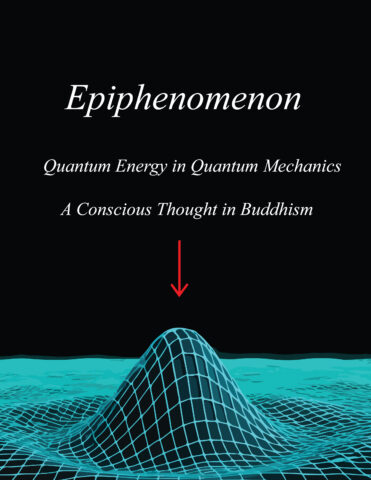
To understand what a thought is in Buddhism, we again use the image above as an illustration. As discussed, in quantum field theory, an epiphenomenon is a ripple in the quantum energy field. Therefore, by the definition of energy in physics, an epiphenomenon is a “quantitative property,” essentially a number in an equation. However, in Buddhism, an epiphenomenon is a ripple in non-luminosity, a field of consciousness. Therefore, as a ripple of consciousness, an epiphenomenon in Buddhism refers to a thought. It is an essential concept as we continue and try to understand the meaning of “every thought takes a form.”
What happens after the waves of consciousness carrying the “experiential content” are met by “billions of thoughts per second” is that they become more turbulent. Turbulence generates larger ripples. According to quantum field theory, only when ripples in the quantum field are large enough to be “measured” can they be considered an epiphenomena.
So, what is the smallest ripple that is large enough to be measured in quantum mechanics to become an epiphenomenon?
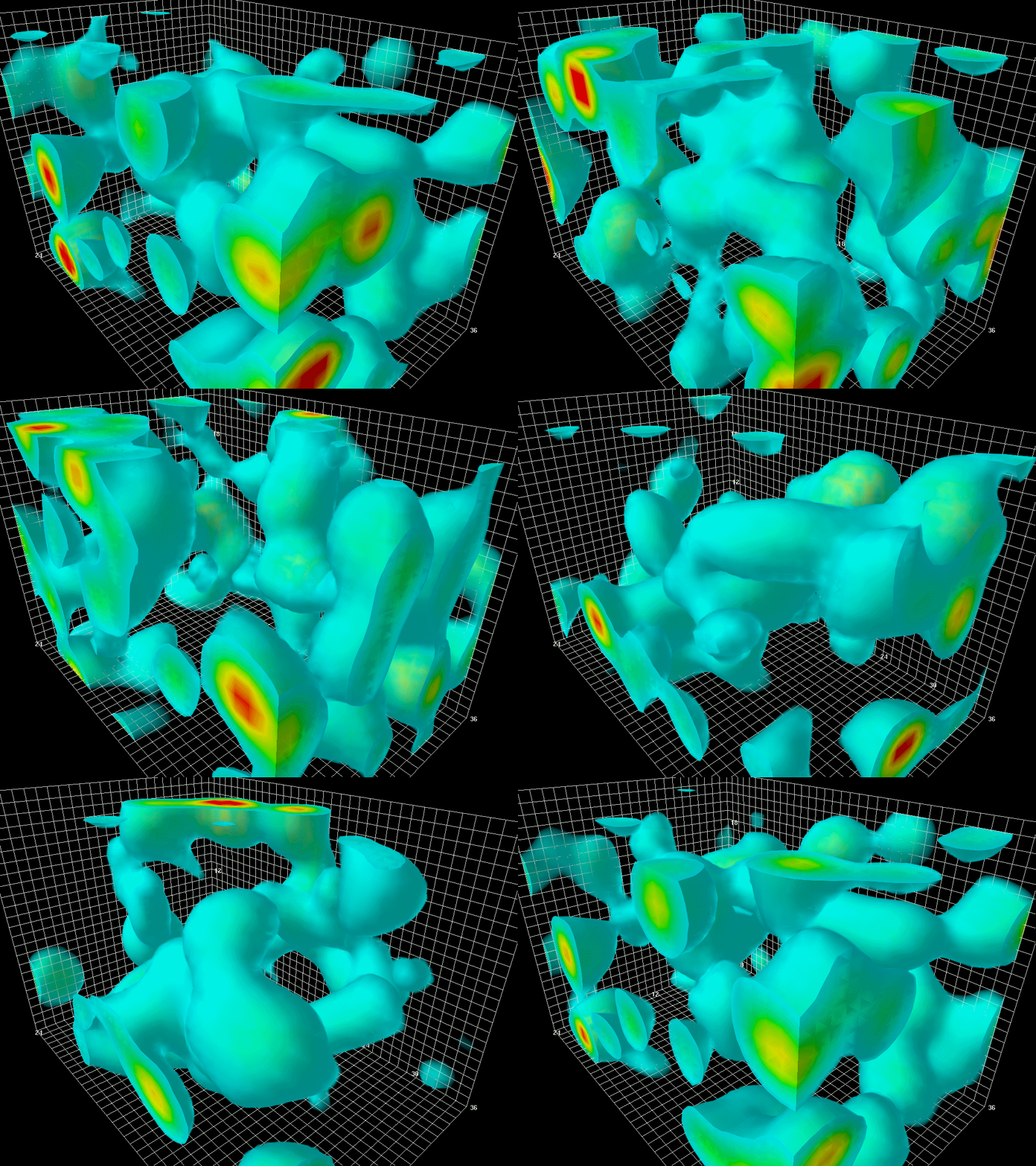
The above is a computer simulation created by Dr. Derek Leinweber at the Universe of Adekaide. According to Dr. Leinweber, this computer simulation depicts the annihilation of quarks in a gluon field (a quantum energy field named for this particular situation) at a speed of “one million billion billion frames per second.” In other words, a quark is the smallest ripple that is large enough to be measured. However, it is too small to be measured directly; it can only be quantified through a computer simulation.
As discussed in Post 14, in Buddhism, the tiniest epiphenomenon is known as “neighbor-to-emptiness dust (Chinese: 鄰虛塵).” In the Śūraṅgama Sūtra (Chinese: 大佛頂首楞嚴經), Buddha described its speed of annihilation as “born here, annihilated the same here (Chinese: 當處出生 隨處滅盡).”
If you are like me and consider annihilations at the speed of “one million billion billion frames per second” and “born here, annihilated the same here” to be equivalent, then quarks and “neighbor-to-emptiness dust” are equivalent, except that quarks are energy. In contrast, “neighbor-to-emptiness dusts” refer to conscious thoughts.
In other words, while quarks are the smallest epiphenomena large enough to be measurable through computer simulation, the fact that the “neighbor-to-emptiness dust” is mentioned in the Śūraṅgama Sūtra indicates that it is the smallest thought large enough for Buddha to perceive it directly. This, of course, indicates that direct perception is more powerful than the human senses in detecting extremely small phenomena, bub comparable with a computer simulation.
So, the “forms” referenced in the statement “every thought takes a form” refer to the external appearance of a thought large enough for Buddha to perceive directly. Just like quantum mechanics cannot measure ripples smaller than quarks, there is also a limit to what can be directly perceived.
The word Buddha uses to indicate the external appearance of a thought large enough for Buddha to perceive directly is “image.” For example, as discussed in Post 25, Buddha’s definition of direct perception is that it is “nonconceptual in the sense that it does not perceive its object through the medium of an image, as does thought.” In other words, to perceive mentality directly, one must prevent the formation of the “image”. Since the only way to prevent the “image” from forming is to avoid the conceptualization process, we can infer that the “image” refers to the conceptualized external appearance of thoughts large enough to be an epiphenomenon.
2) All forms are conscious
The meaning of this statement should be clear by now. “All forms are conscious” because the “forms” are the external appearance of conscious thoughts large enough for Buddha to perceive directly.
3) Conscious thoughts are so minute and delicate that they cannot be held.”
Conscious thoughts cannot be held because they come in and out of existence at the speed of “three thousand two hundred million one hundred thousand thoughts at the snap of a finger.” If one can snap one’s finger two or three times a second, there will be billions and billions of them in a second. They are indeed too delicate to be held.
4) Dr. Fisch’s fourth sensing step is “sitting in the command room of our minds with the inner eyes and looking out,” and it corresponds to the fifth Aggregate, Vijnanaskandha Chinese: 識蘊).
Vijnana, according to the Princeton Dictionary of Buddhism, is “consciousness.”
To discuss the meaning of the Aggregate of Consciousness, we turn to the Consciousness-Only School of Buddhism.
Consciousness-Only School of Buddhism (Romanized Sanskrit=vijñanavada; Chinese: 唯識宗), also known as the Yogachara School, “is one of the two major Mahāyāna schools in India. Maitreya, who is thought to have lived around 270-350 (350-430 according to another account), is often regarded as the founder of the Consciousness-Only school. This school upholds the concept that all phenomena arise from the vijnana or consciousness and that the basis of all functions of consciousness is the Alaya-consciousness.”
According to The Princeton Dictionary of Buddhism, “the cardinal doctrine of the Consciousness-Only School is that the objects of experience are mere projections of consciousness. Thus, all objects are mere representations, and all categories are mere designations. No object is the natural basis of its name; rather, the mind itself instead designates the object.”
In other words, there is no “command room” or “inner eyes looking out” in the mind. Instead, there are projections of consciousness. In other words, the consciousness that senses the “experiential contents” that “the world impacts on us in a causal manner through all our senses” also allows them to become the “reading in of the mind,” conceptualize them “in ways we do not govern,” and projects the conceptualized “form” to be seen on the “screen“ as “the world that we experience,” as Dr. Fisch described them.
Indeed, from the fifth Aggregate of Consciousness, we enter “the world we experience,” the last of Dr. Fisch’s five sensing steps. It corresponds to the first Aggregate, Rupaskandha (Chinese: 色蘊), or the Aggregate of Rupa.
1) Rupa (Chinese: 色), according to The Princeton Dictionary of Buddhism, is “in Sanskrit and Pali, ‘body,’ ‘form,’ or ‘materiality,’ viz., that which has shape and is composed of matter. More generally, rupa refers to materiality, which serves as the object of the five sensory consciousness (vijnana): visual, auditory, olfactory, gustatory, and tactile.”
However, there is no “body, materiality, or matter” in Rupa because it is a “mere projection of consciousness.” Including them in the definition of Rupa is another example of the Five Aggregates being poorly understood. In fact, including “body, materiality, or matter” in the definition of Rupa is a delusional misunderstanding of reality, as the Buddha calls it “the reification of what are actually imaginary external phenomena.”
Indeed, as discussed in Post 17, Buddha deems all Rupas Namarupa (Chinese: 名色) because what appears to be “body, materiality, or matter” is “body, materiality, or matter” in name only.
The fact that the universe is a “mere projection of consciousness” is verifiable by any enlightened individual. Upon enlightenment, the mind of the enlightened individual becomes “no thought” and quiescent. When the mind is quiescent, “mere projection of consciousness” cannot occur. When there are no “mere projections of consciousness,” the universe should disappear. In other words, the disappearance of the universe should be the hallmark of Buddhist enlightenment.
In the Verification Category, there are three examples of Buddhist enlightenment: in Post 10, Adyashanti, a contemporary American, and in Post 11, two Chinese Dharma Masters from hundreds of years ago, during the Tang Dynasty. They all witnessed the disappearance of the universe upon their enlightenment.
The Five Aggregates tell us that.
1) Everything that exists in the universe exists because of observation.
2) Observer dependent and existing as a “mere projection of consciousness,” everything in the universe is illusory, as Buddha teaches in the Diamond Sūtra,
“All conditioned phenomena are like the illusions of dreams and shadows of bubbles (Chinese: 一切有為法; 如夢幻泡影),
like dew and lightning, this is how to have insight into all phenomena (Chinese: 如露亦如電, 應作如是觀.”)
3) With all the Five Aggregates being conscious, there is nothing “physical” in the universe. Therefore, treating the body and mind as separate is what the Buddha calls “the reification of what are actually imaginary external phenomena,” a delusional misunderstanding of reality, that is the root cause of existential suffering and afflictions.
As discussed in Post 10, the solution to ending existential suffering is to overcome cognitive obstructions. It is an accomplishment that only an advanced bodhisattva can achieve by perfecting his “understanding of emptiness.”
In the next post, we will use the story of Bodhisattva Avalokiteśvara, as recorded in the Heart Sūtra, to illustrate how this is done.
(If you like this post, please like it on our Facebook page and share. Thank you.)